
Aston Parish Church, Birmingham
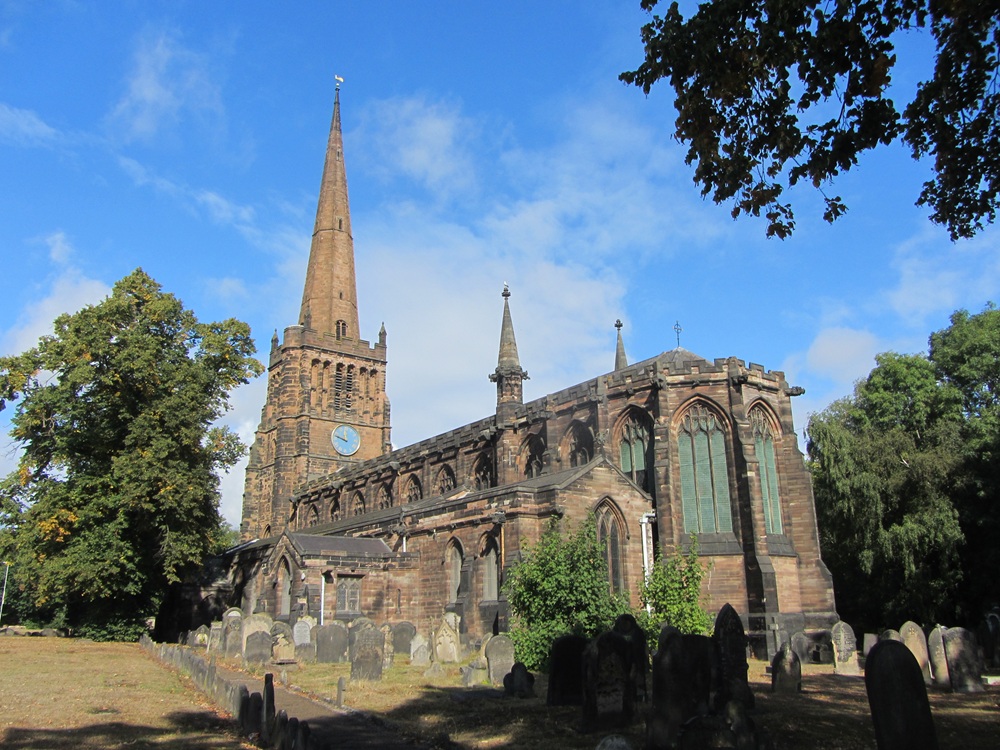
Aston and Nechells Parish Church is a medieval parish church with a 15th‑century Tudor tower and substantial Victorian Gothic restoration, combining centuries of architectural development in one building. Its fabric reflects the long history of the parish, but the most significant surviving features are the monuments, tombs, and memorials of the Holte family. This page documents those Holte connections, recording the effigies, inscriptions, and heraldic elements associated with the family across eight centuries.
Aston Parish Church Memorials
Type: Elizabethan Wall Monument Location: Chancel / North Wall
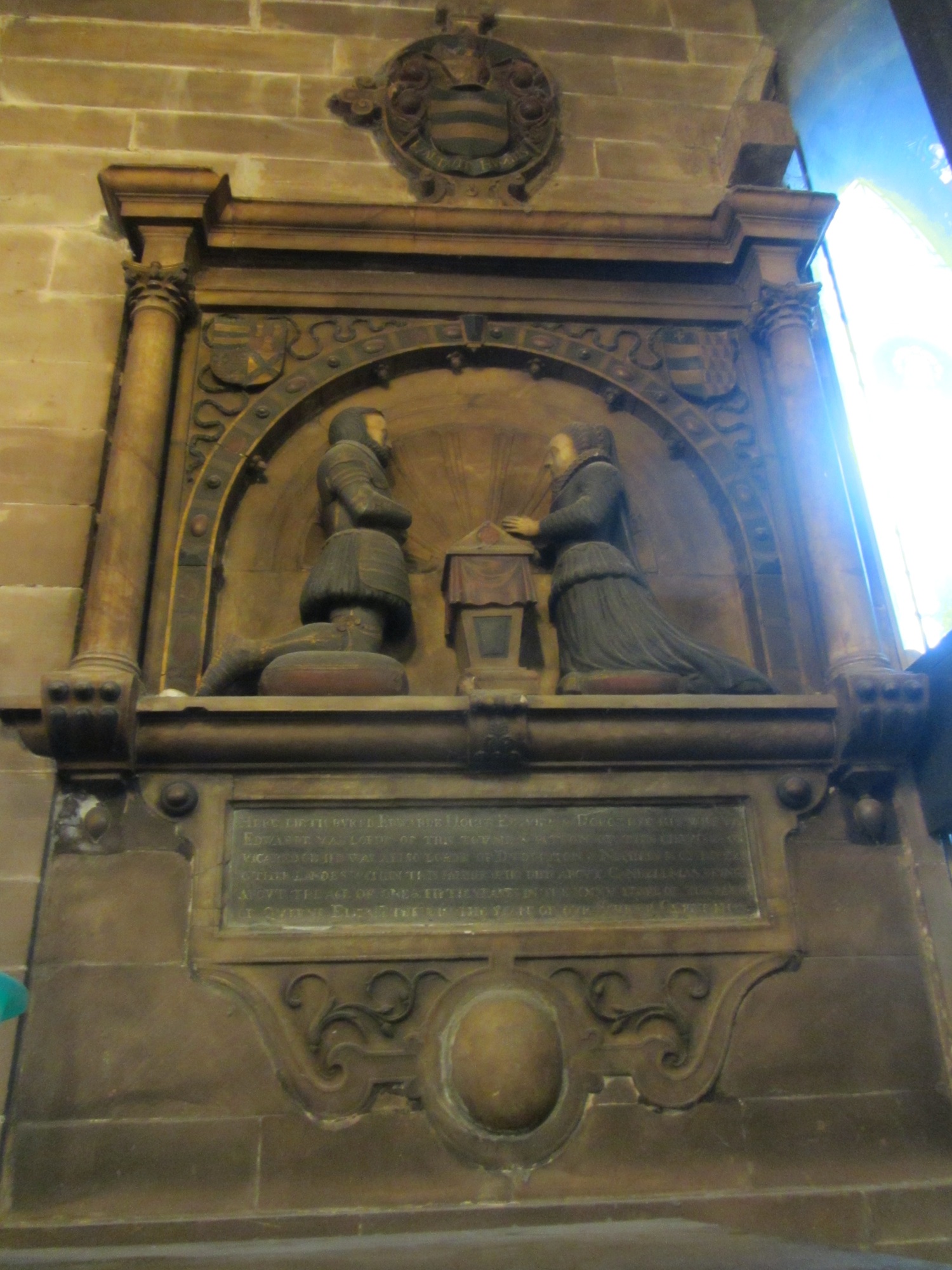
Classic late-Elizabethan “kneeler” monument to Edward Holte (d. 1592/3) and his wife Dorothy in the north aisle of St Peter and St Paul, Aston. Edward Holte (c.1542–1593) was lord of the manor of Aston, patron of the church, and owner of Duddeston and Nechells. He was the father of Sir Thomas Holte (1st Baronet), the builder of Aston Hall. Dorothy was a daughter of John Ferrers of Tamworth Castle. Edward was buried on 15 February 1592/3; Dorothy was buried in December 1594. The monument is one of the earliest of the major Holte family memorials still in the church. It sits near the older 1514 chest tomb of William Holte and is part of the important sequence of Holte monuments that run through the north aisle.
Insciption: Here lieth buried Edwarde Holte, Esquier, and Dorothye his wife: wch Edwarde was Lorde of this Towne and Patron of this Churche or Vicaredge; He was allso Lorde of Duddeston and Nechels, and of divers other landes within this parishe: who dyed about Candellmas, beinge about the age of one and fiftie yeares, in the xxxv yeare of the raigne of Queene Elizabethe, and in the yeare of our Saviour Christ 1592.
Type: Black Marble Pyramidal / Obelisk Monument Location: North Aisle
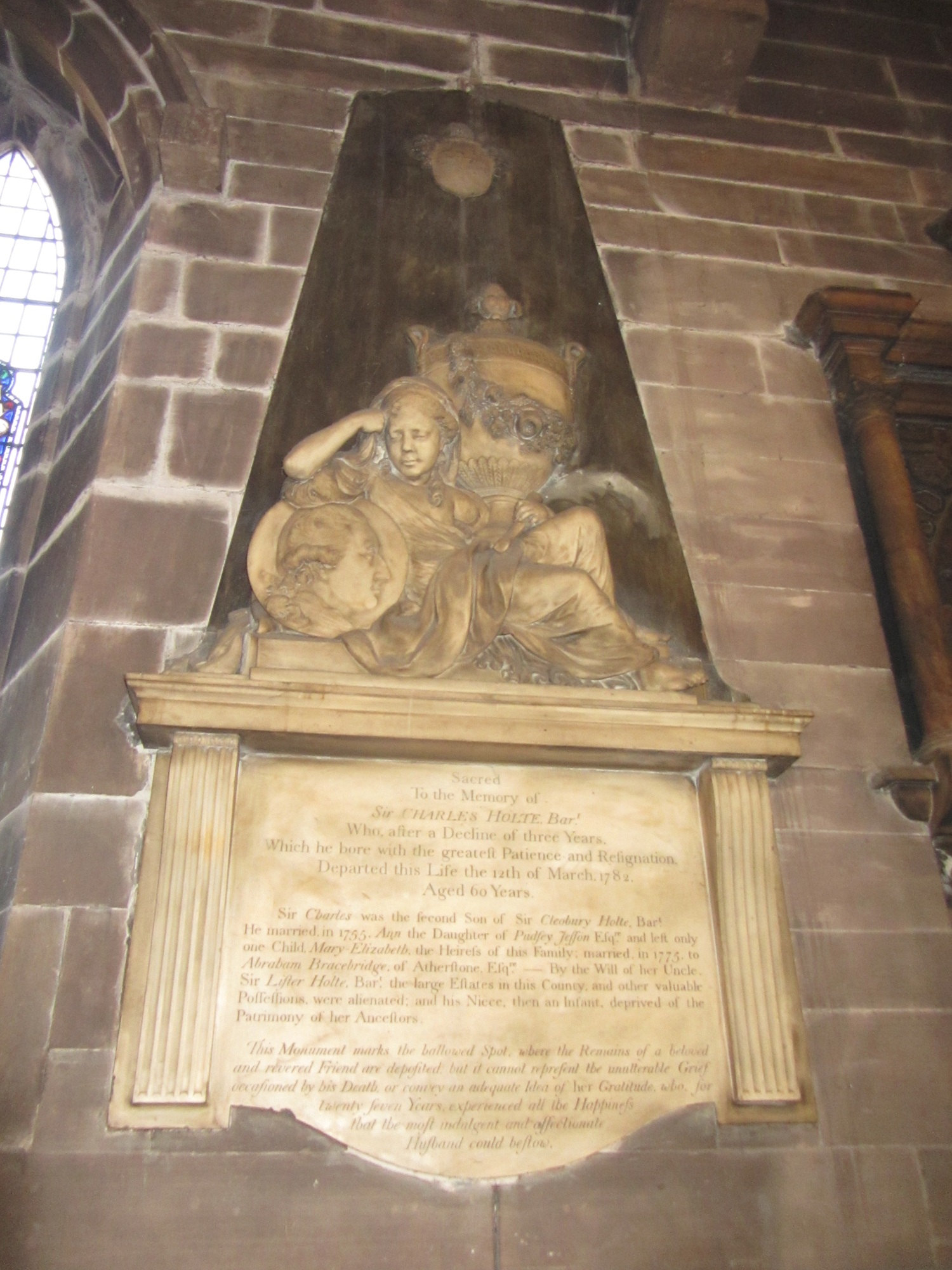
Monument with mourning figure, urn, and medallion portrait; to Sir Charles Holte, 6th/last Baronet. A striking wall monument featuring a white marble tablet set against a backing of black marble carved into a sharp pyramidal obelisk. Commissioned by his daughter, Mary Elizabeth, it records the famous legal dispute over the Holte family estate. Sacred To the Memory of Sir CHARLES HOLTE, Bart. Who, after a Decline of three Years, Which he bore with the greatest Patience and Resignation, Departed this Life the 12th of March 1782. Aged 60 Years. Sir Charles was the second Son of Sir Cleobury Holte, Bart. He married, in 1755, Ann the Daughter of Pudsey Jesson Esqre and left only one Child Mary-Elizabeth, the Heiress of this Family; married, in 1775, to Abraham Bracebridge, of Atherstone, Esqre - By the Will of her Uncle, Sir Lister Holte, Bart. the large Estates in this County, and other valuable Possessions, were alienated; and his Niece, then an Infant, deprived of the Patrimony of her Ancestors. This Monument marks the hallowed Spot, where the Remains of a beloved and revered Friend are deposited: but it cannot represent the unalterable Grief occasioned by his Death, or convey an adequate Idea of her Gratitude, who, for twenty seven Years, experienced all the Happiness that the most indulgent and affectionate Husband could bestow.
Type: Circular plaque Location:
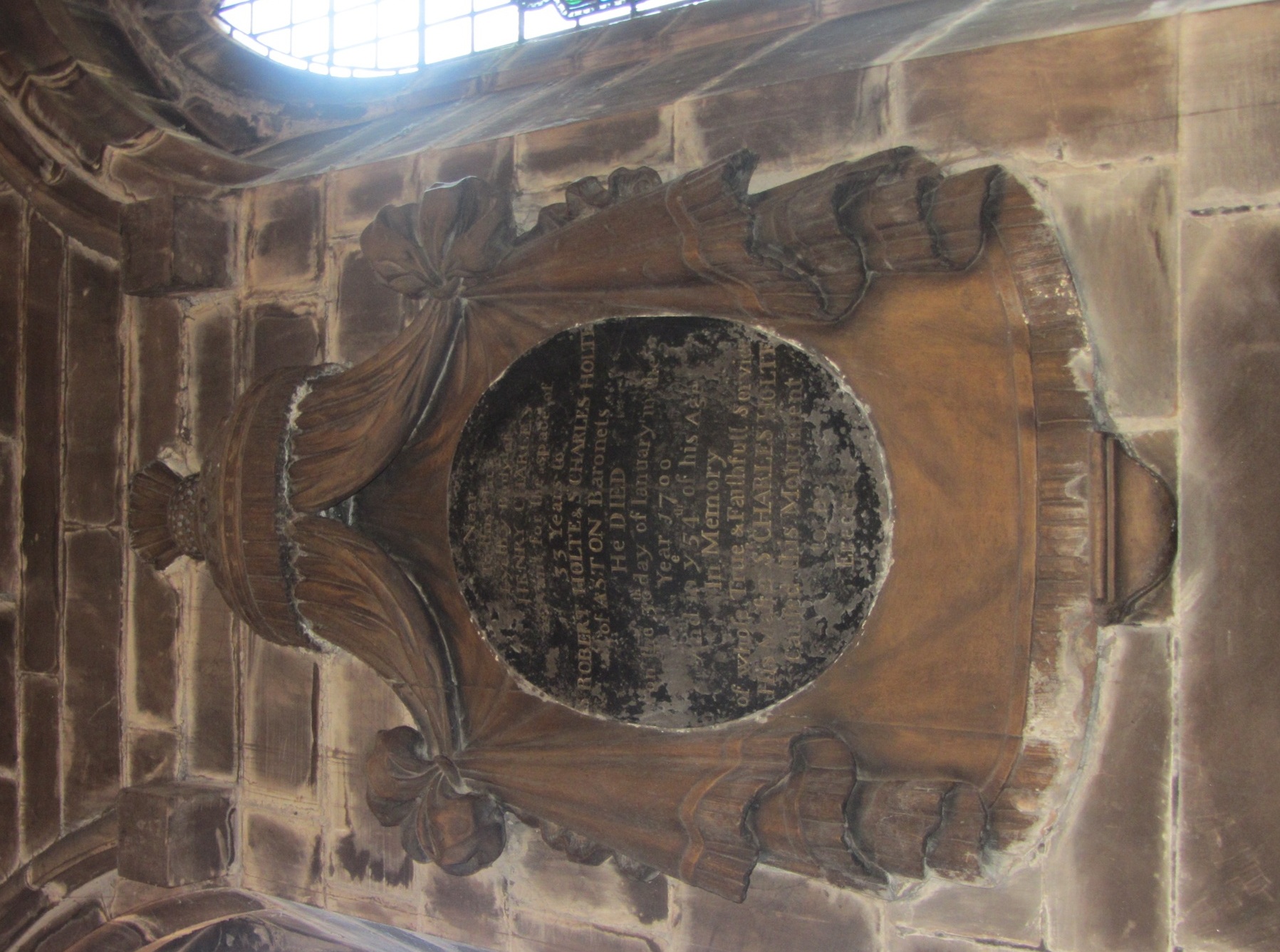
Circular plaque under draped canopy, to a family servant of Robert Holte and Sir Charles Holte. Near this Place lyeth the Body of HENRY CHARLES Servant for the space of 33 Years to ROBERT HOLTE & Sr CHARLES of ASTON Baronets He DIED on the 3d day of January in the Year 1700 And in ye 54th of his Age In Memory of whose True & Faithfull Service His Master Sr CHARLES HOLTE Caused this Monument to be Erected
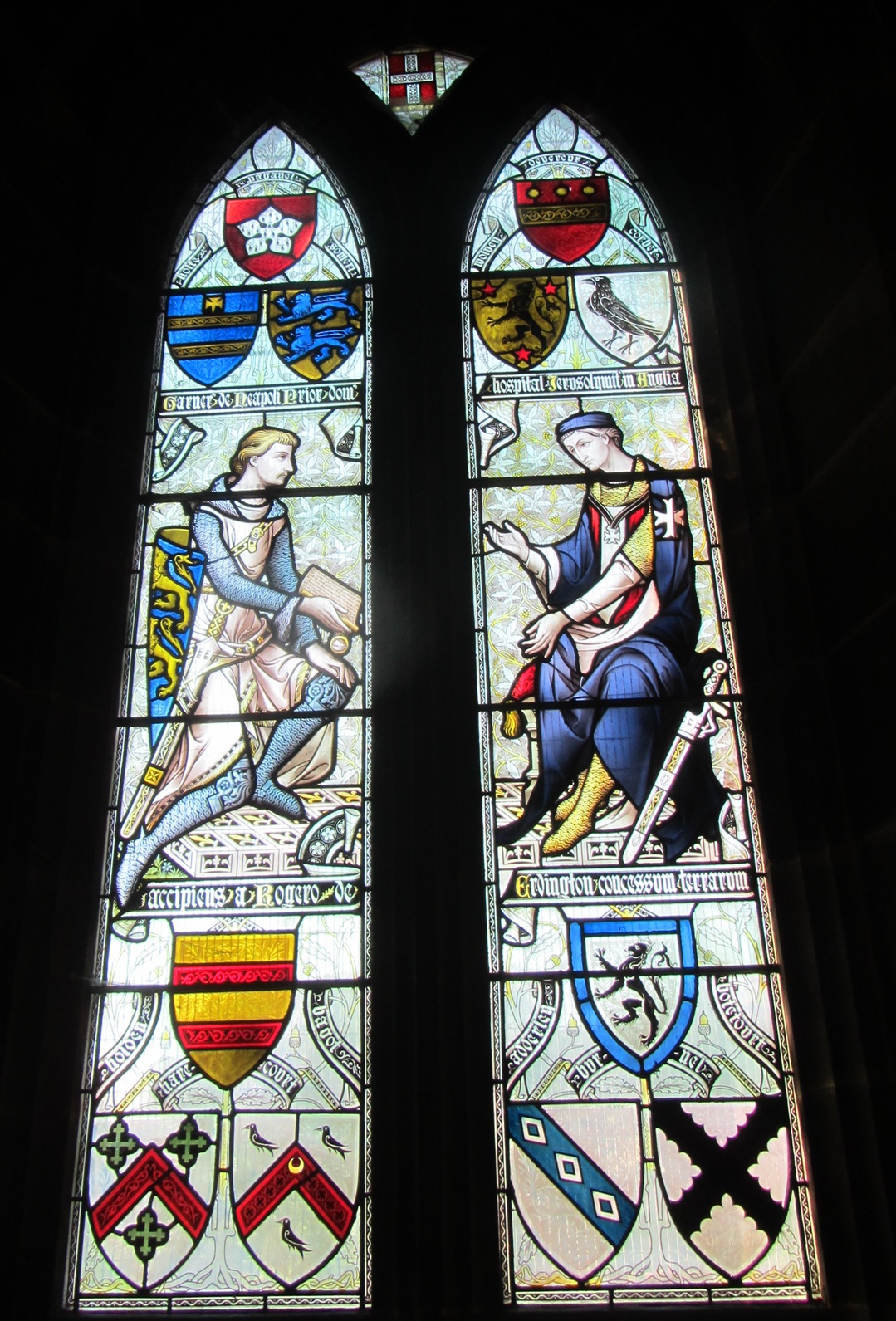
The window is part of the Victorian-era glazing installed during the 19th‑century restoration of Aston Parish Church, when many medieval windows were replaced or heavily renewed. Its inscription commemorates members of the Holte family, reflecting the long-standing connection between the Holtes and the parish. Windows of this period typically combined coloured quarries with small figurative panels or heraldic motifs, so it is likely that the Holte arms or symbolic imagery relating to the family were incorporated into the design. Although the original medieval glass no longer survives, the commemorative window stands as a visual reminder of the Holte family’s influence on Aston’s religious and civic life.
Type: Classical Wall Tablet Location: South Aisle
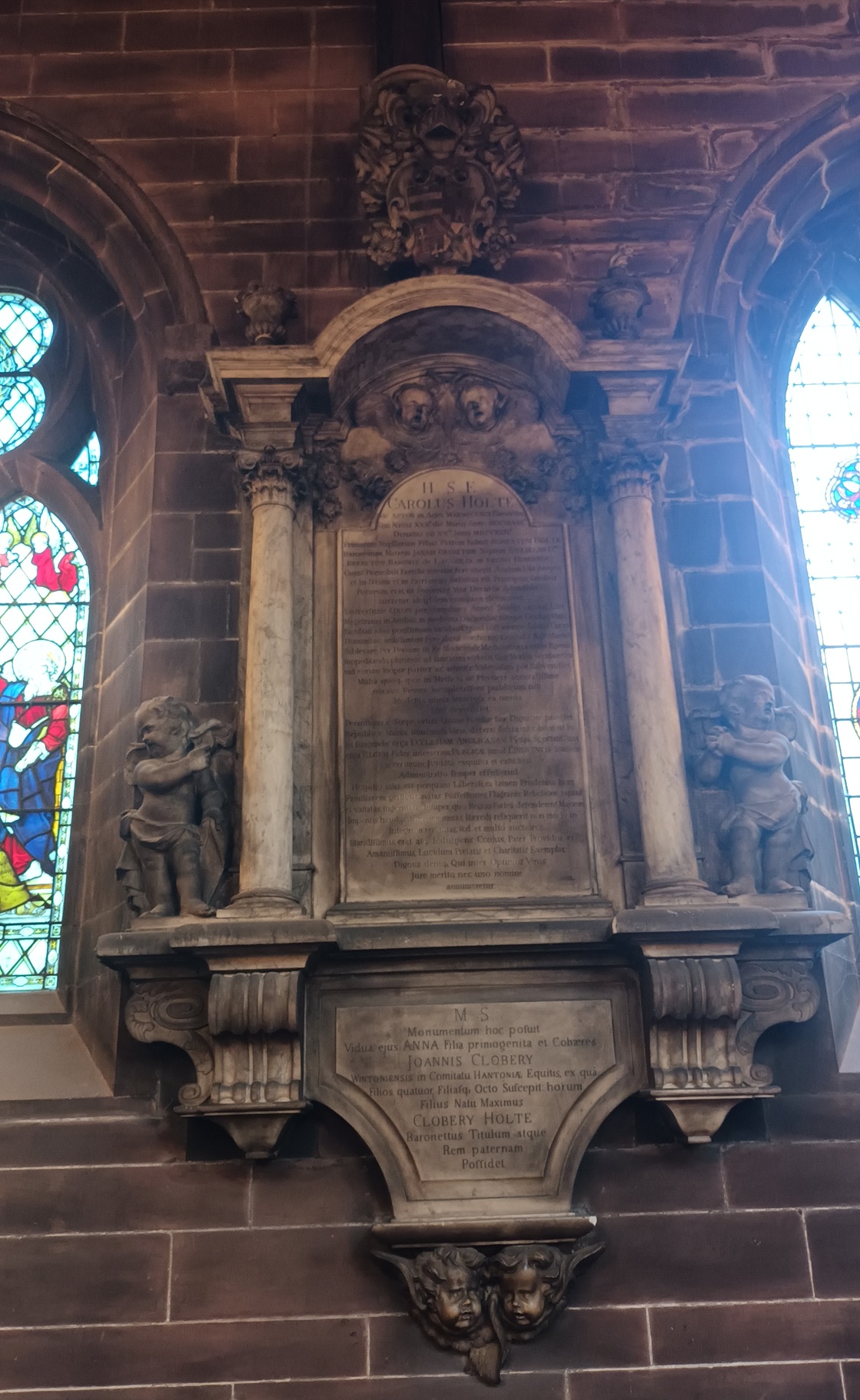
Large architectural monument with columns, putti/cherubs, and dual Latin tablets; to Sir Charles Holte, 3rd Baronet, d. 1722. A fine classical marble mural tablet erected by his widow, Dame Anne Holte (née Clobery). Sir Charles was a scholar, patron of medicine, and Deputy Lieutenant for Warwickshire. Upper tablet (main inscription begins under the pediment/arms): H.S.E. CAROLUS HOLTE De Aston, in Agro Warwicensi, Baronettus, Qui natus xxii die Martij, anno MDCXLIX, Denatus est xv° Junii, MDCCXXII. Primarum nuptiarum filius, patrem habuit Robertum Holte, Baronettum, matrem Janam Brereton, neptam Gulielmi Dni Brereton, Baronis de Laughlin, in Regno Hiberniæ, Cujus prænobili Familia teneram fere exegit ætatem, ubi amoris Et in Deum et in Patriam, ijs imbutus est, Principijs quibus Futurum erat, ut sequentis vitæ decursu splendido Uteretur ab ijsdem nunquam desesseret. Universitate Oxon. per complures Annos studijs vacavit, ubi Magistratus in Artibus et in Medicina Doctoratus suscepit gradus: huic Facultati ideo potissimum incubuit, quod post æternæ salutis curam Hominibus maximum fore duxit confecto cruciatu ægrotantes Sublevare per peritiam in re medicinali, medicamenta etiam egenis Suppeditando, plurimos ad sanitatem reduxit qui morbis occubuissent, Nisi eorum inopiæ pariter ac adversæ Valetudini pie subvenisset. Multa quoque quæ in medicis ac physicis accuratissime Notavit, penum locupletassent publicum, nisi Modestia nimis injuriosa ea omnia Igni devovisset. Per antiqua e stirpe ortus, quum familiæ suæ dignitati præesset, Reipublicæ munia istiusmodi viris deferri solita ita obivit, ut in iis fungendis, erga Ecclesiam Anglicanam pietas spectatissima, intemerata, publice simul libertatis studium virisque exquisita et castissima semper effulserint. Flagrante Rebellionе, ea tamen prudentia rem Familiarem gessit, ut avitas possessiones flagrante rebellione raptas Et vastatas, ingentibus insuper quæ regias partes defenderant majorum Impensis haud parum imminutas, heredi reliquerit non modo in Integrum restitutas, sed et multo auctiores. Blandissimus erat atque indulgens conjux, Pater providus et Amantissimus, lucidum pietatis et charitatis exemplar. Dignus denique qui inter optimos viros Jure merito, nec uno nomine, Annumeretur. Lower tablet: M.S. Monumentum hoc posuit Vidua ejus ANNA, filia primogenita et Coheres JOANNIS CLOBERY, Wintoniensis, in comitatu Hantoniae, equitis, ex qua Filios quatuor Filiasq. octo suscepit; horum Filius Natu Maximus CLOBERY HOLTE, Baronettus, titulum atque Rem paternam Possidet.
English translation of the upper plaque Here lies buried Charles Holte, of Aston in the county of Warwick, Baronet, who was born on the 22nd day of March in the year 1649 and died on the 15th of June 1722. He was the son of the first marriage of Sir Robert Holte, Baronet, by his mother Jane Brereton, granddaughter of William, Lord Brereton, Baron of Laughlin in the Kingdom of Ireland. In that noble family he spent almost the whole of his early youth, and there he was imbued with those principles of love towards God and towards his country by which it was destined that, in the splendid course of his later life, he should be guided and from which he never departed. He devoted several years to study at the University of Oxford, where he took the degrees of Master of Arts and Doctor of Medicine. He applied himself especially to this profession because, after the care of eternal salvation, he considered it the greatest service to mankind to relieve the sufferings of the sick through skill in medicine. By supplying medicines also to the poor he restored many to health who would otherwise have succumbed to their diseases, had he not piously come to the aid of both their poverty and their failing strength. Many things which he observed with the greatest accuracy in medicine and natural philosophy would have enriched the public store of knowledge, had not an excess of modesty caused him to consign them all to the flames. Descended from an ancient stock, when he stood at the head of his family he discharged those public duties which are customarily entrusted to men of his rank in such a manner that, in the performance of them, a most conspicuous and unblemished piety towards the Church of England, together with a pure and refined zeal for public liberty, always shone forth. During the raging of the Rebellion he managed his private affairs with such prudence that the ancestral estates, which had been seized and laid waste in the heat of the Rebellion and further diminished by the heavy expenses his ancestors had incurred in defence of the royal cause, he left to his heir not only restored to their former condition but greatly increased. He was a most gentle and indulgent husband, a prudent and most affectionate father, and a shining example of piety and charity. Worthy, finally, to be ranked, and that deservedly on more than one account, among the best of men. English translation of the Lower plaque Sacred to his memory. This monument was erected by his widow Anna, eldest daughter and co-heiress of John Clobery of Winchester in the county of Hampshire, Knight, by whom he had four sons and eight daughters. Of these the eldest son, Clobery Holte, Baronet, possesses the title and the paternal estate.
Type: Baroque Mural Monument Location: Chancel
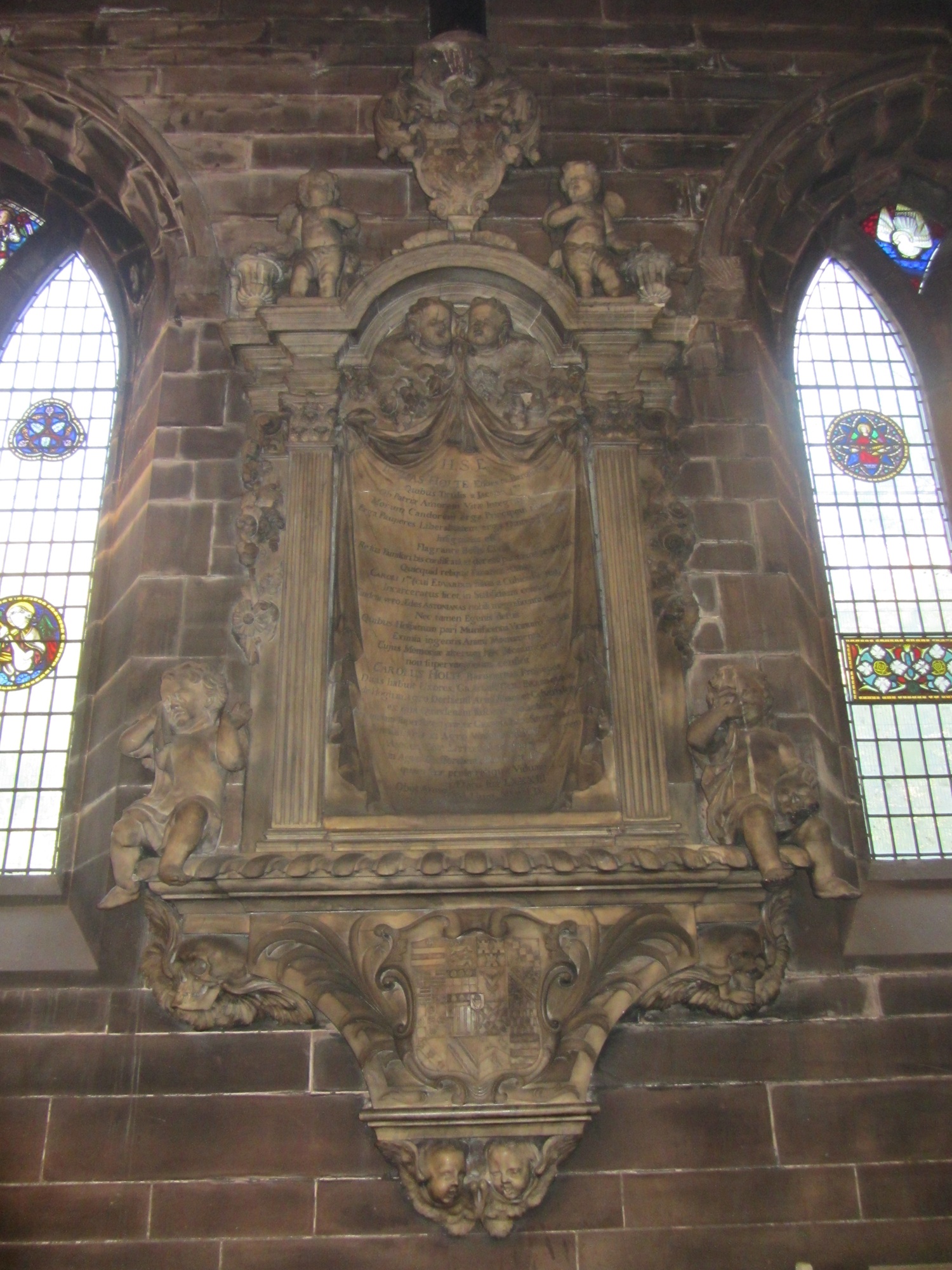
A grand Baroque marble wall monument celebrating the builder of Aston Hall. Framed by winged cherubs, skulls (memento mori), urns, drapery, and finely carved floral garlands, the monument marks the burial of the 1st Baronet. H.S.E. THOMAS HOLTE Eques et Baronettus uibus Titulis a Jacobo I° Ob Patriae Amorem Vitae Integritatem Morum Candorem erga Principiam Fidem Erga Pauperes Liberalitatem erga Omnes Justitiam Insignitus est Flagrante Bello Civili Etsi Ære suo familiari bis confiscato, et decima parte semel proscriptus, Quicquid reliquit Fanatica Rabies Carolo I° (cui Edwardus filius a Cubiculis fuit) in Subsidium contulit. Nec tamen Egestas destituit Quibus Hospitium pari Munificentia vicinum condidit: Eximia ingentis Animi Monumenta. Cujus Memoriæ alterum hoc Monumentum non superfluum censuit CAROLUS HOLTE Baronettus Pronepos. Duas habuit Uxores, Gratiam, Gulielmi Bradbourne de Hough in Agro Derbiensi Arm. filiam et Cohæredem, A qua quindenam suscepit sobolem: et Annam, Edwardi Littleton de Pillaton in Agro Staffordiensi Equitis Aurati filiam. Obiit Anno Salutis MDCLIV Ætatis suæ LXXXIII. English translation Here lies buried Thomas Holte, Knight and Baronet, who was honoured with those titles by James I on account of his love of his country, the integrity of his life, the purity of his morals, his fidelity to his Prince, his liberality to the poor, and his justice towards all. During the raging of the Civil War, although his private fortune was twice confiscated and once subjected to a tenth, whatever fanatical fury left him he contributed to the support of Charles I (to whom his son Edward was a Gentleman of the Bedchamber). Nor did poverty desert those for whom, with equal munificence, he built the neighbouring hospital: outstanding monuments of a great mind. To whose memory this second monument was not thought superfluous by Charles Holte, Baronet, his great-grandson. He had two wives: Grace, daughter and co-heiress of William Bradbourne of Hough in the county of Derby, Esquire, by whom he had fifteen children; and Anne, daughter of Edward Littleton of Pillaton in the county of Stafford, Knight. He died in the year of Salvation 1654, in the 83rd year of his age.
Type: Neoclassical Wall Monument Location: North Aisle
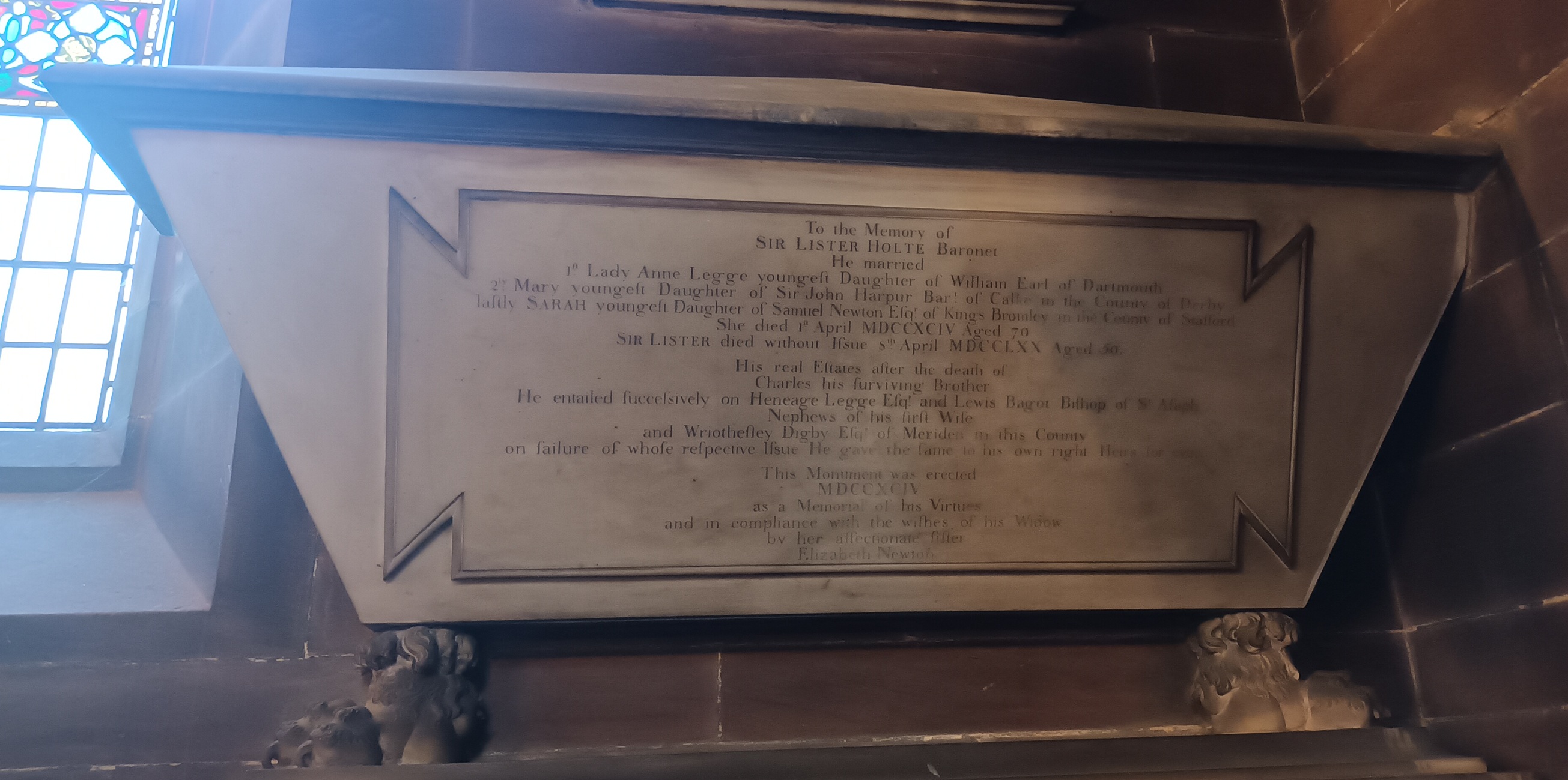
To the Memory of SIR LISTER HOLTE Baronet He married 1st Lady Anne Legge youngest Daughter of William Earl of Dartmouth 2nd Mary youngest Daughter of Sir John Harpur Bar. of Calke in the County of Derby lastly SARAH youngest Daughter of Samuel Newton Esq of Kings Bromley in the County of Stafford She died 1st April MDCCXCIV Aged 70 SIR LISTER died without Issue 8th April MDCCLXX Aged 50 His real Estates after the death of Charles his Surviving Brother He entailed successively on Heneage Legge Esq and Lewis Bagot Bishop of St Asaph Nephews of his first Wife and Wriothesley Digby Esq of Meriden in this County on failure of whose respective Issue He gave the same to his own right Heirs for ever This Monument was erected MDCCXCIV as a Memorial of his Virtues and in compliance with the wishes of his Widow by her affectionate Sister Elizabeth Newton.
Type: Memorial Wall Plaque Location: South Aisle
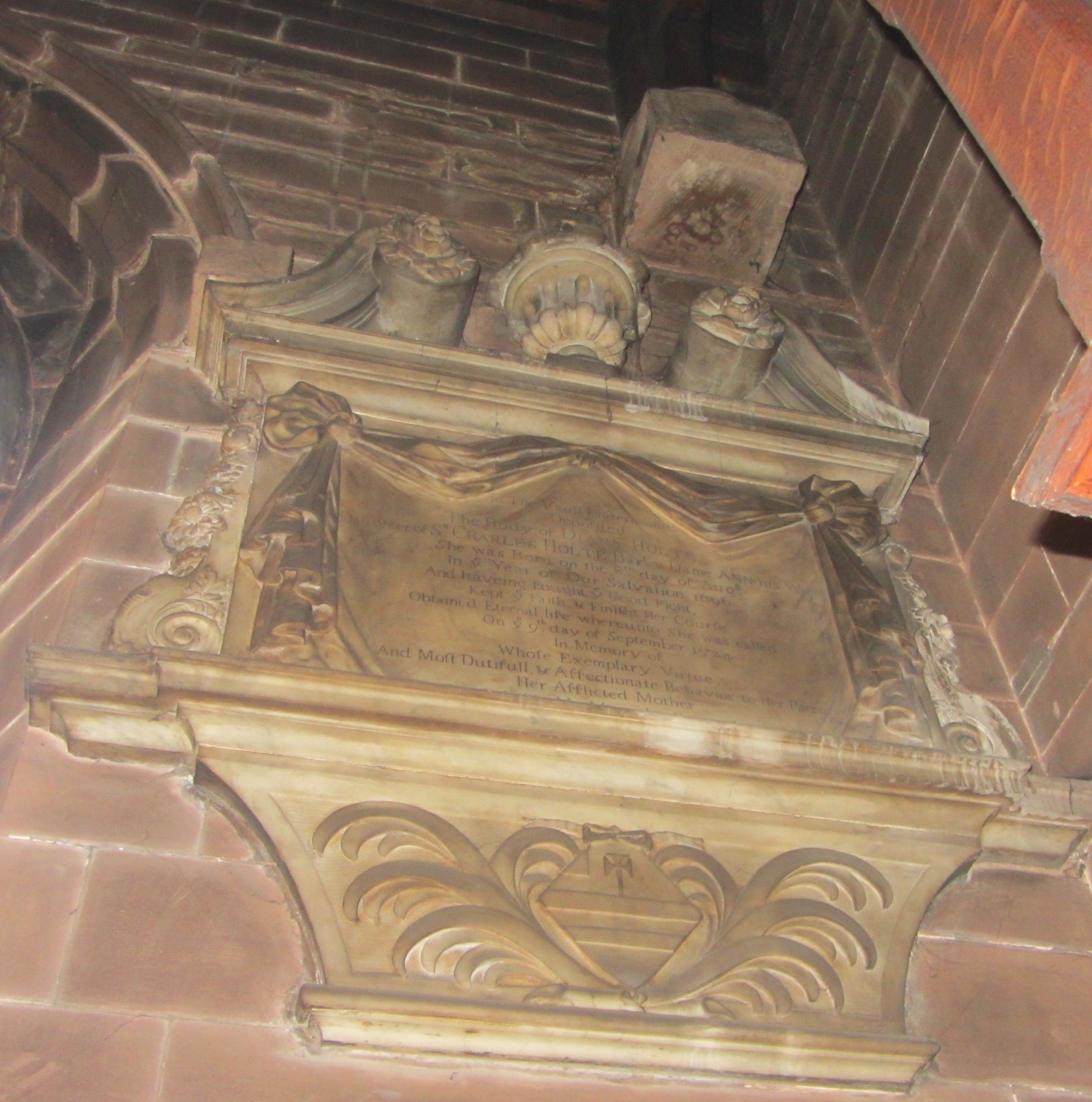
A modest white marble memorial plaque dedicated to Diana Holte, daughter of Sir Charles Holte, 3rd Baronet, and Dame Anne Holte. She died unmarried in her youth.
In the Vault underneath
is Deposited
The Body of DIANA HOLTE
Daughter of Sʳ CHARLES HOLTE Bart. & Dame ANN his Wife.
She was Born on the 8ᵗʰ day of Augˢᵗ
In yᵉ Year of Our Salvation 1696
And having Fought yᵉ Good Fight,
Kept yᵉ Faith & Finish’d Her Course
Obtained Eternal Life whereunto She was called
On yᵉ 9ᵗʰ day of September 1724.
In Memory of
Whose Exemplary Virtue
And Most Dutiful & Affectionate Behaviour to her Parents
Her Afflicted Mother
caused this Marble to be Erected.
Type: Recumbent Alabaster Tomb Chest Location: North Aisle / Chantry Chapel
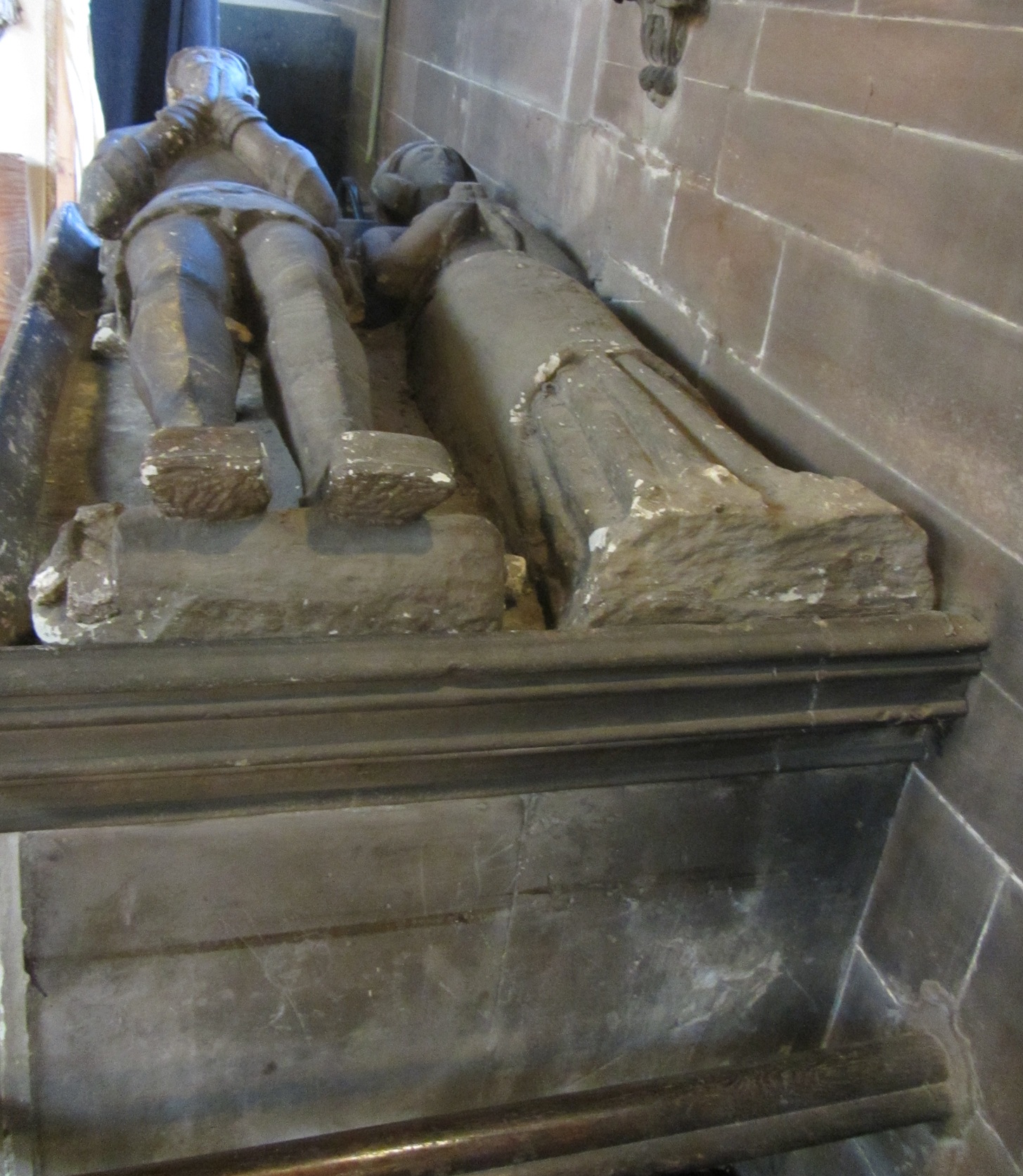
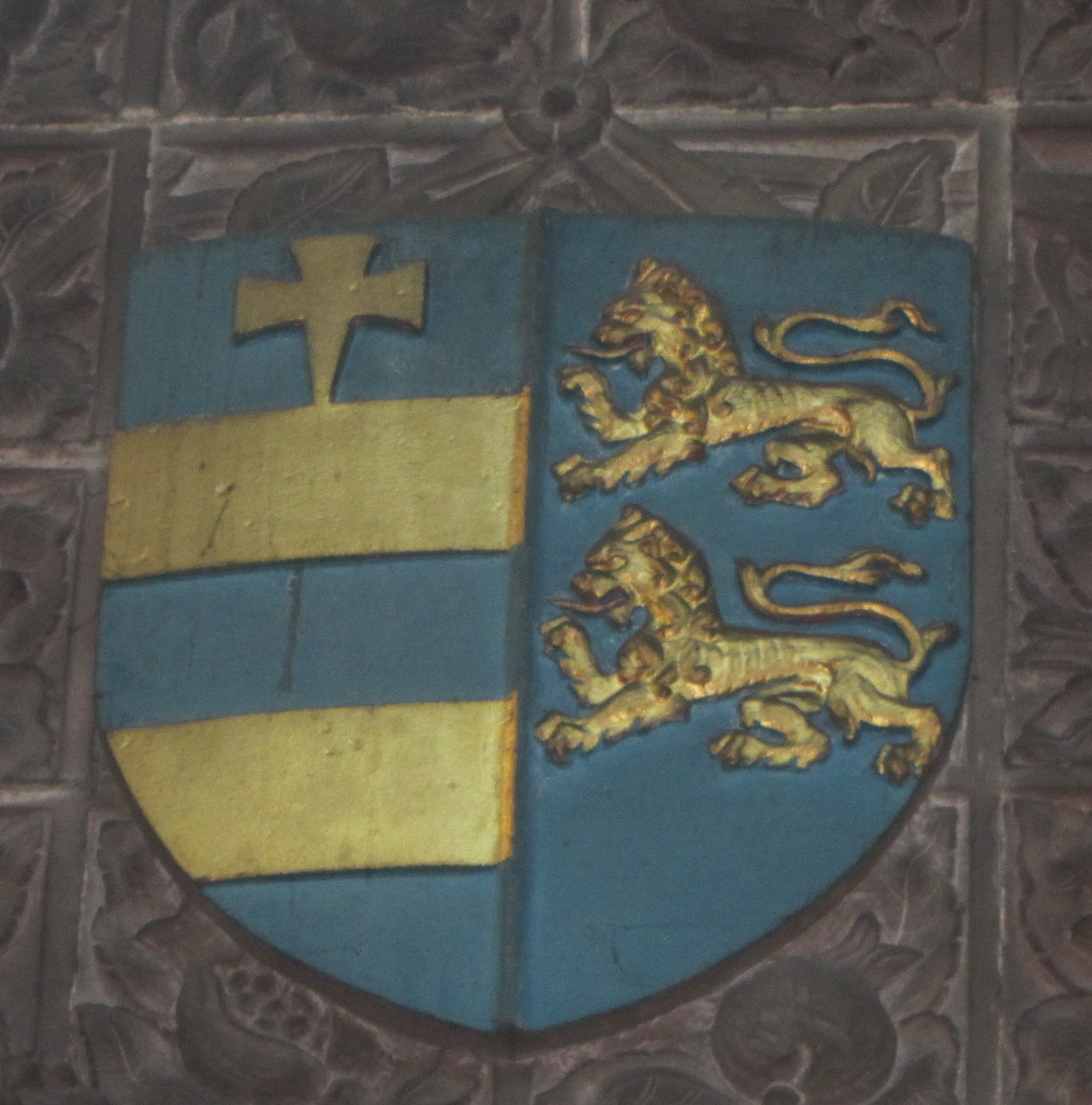
1514 William Holte and Joanna chest tomb monument on the north aisle now. An impressive late-medieval tomb chest featuring recumbent alabaster effigies of William Holte (Esq.) and his wife Joanna. William is depicted in plate armour with a lion at his feet, while Joanna wears traditional Tudor costume and headdress. Around the base of the chest are carved figures of angels holding shields displaying the Holte family arms (Azure, two bars or, in chief a cross-crosslet fitchée).
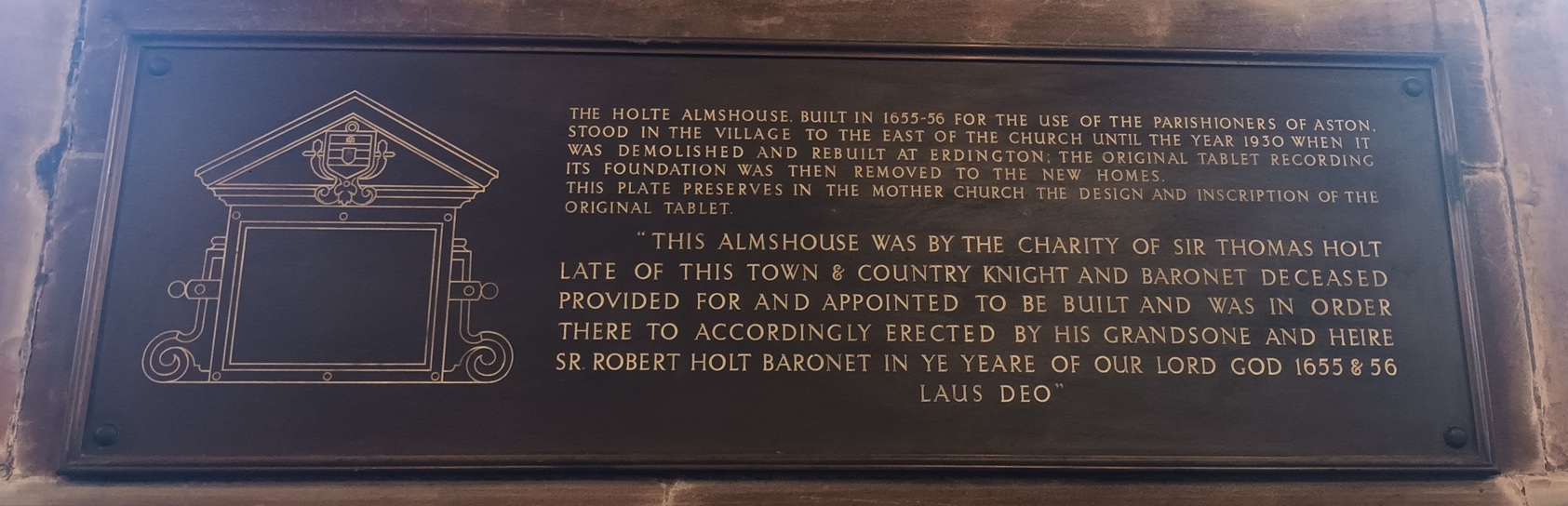
The Aston almshouses referenced on the monument were part of a long-standing charitable tradition in the parish, providing accommodation for elderly or impoverished residents who had fallen on hard times. They formed an important element of Aston’s social welfare system, supported by local benefactors and closely tied to the Holte family’s reputation for civic responsibility. Almshouses of this period typically offered modest lodging and small allowances, enabling parishioners to remain within their community with dignity. Although the original buildings no longer survive, their mention on the monument reflects the Holte family’s role in sustaining charitable institutions that shaped everyday life in Aston for generations.
The transcription of the modern commemorative plaque:
THE HOLTE ALMSHOUSE, BUILT IN 1655-56 FOR THE USE OF THE PARISHIONERS OF ASTON, STOOD IN THE VILLAGE TO THE EAST OF THE
CHURCH UNTIL THE YEAR 1930 WHEN IT WAS DEMOLISHED AND REBUILT AT ERDINGTON. THE ORIGINAL TABLET RECORDING ITS FOUNDATION
WAS THEN REMOVED TO THE NEW HOMES. THIS PLATE PRESERVES IN THE MOTHER CHURCH THE DESIGN AND INSCRIPTION OF THE ORIGINAL TABLET.
“THIS ALMSHOUSE WAS BY THE CHARITY OF SIR THOMAS HOLT LATE OF THIS TOWN & COUNTRY KNIGHT AND BARONET DECEASED PROVIDED FOR AND
APPOINTED TO BE BUILT AND WAS IN ORDER THERE TO ACCORDINGLY ERECTED BY HIS GRANDSONE AND HEIRE SR ROBERT HOLT BARONET IN YE YEARE
OF OUR LORD GOD 1655 & 56
LAUS DEO”
The plaque records that the original 17th-century foundation tablet from the Holte Almshouses was moved to the rebuilt almshouses
in Erdington in 1930, and this modern plate in Aston church preserves both the design and the wording of that original stone.
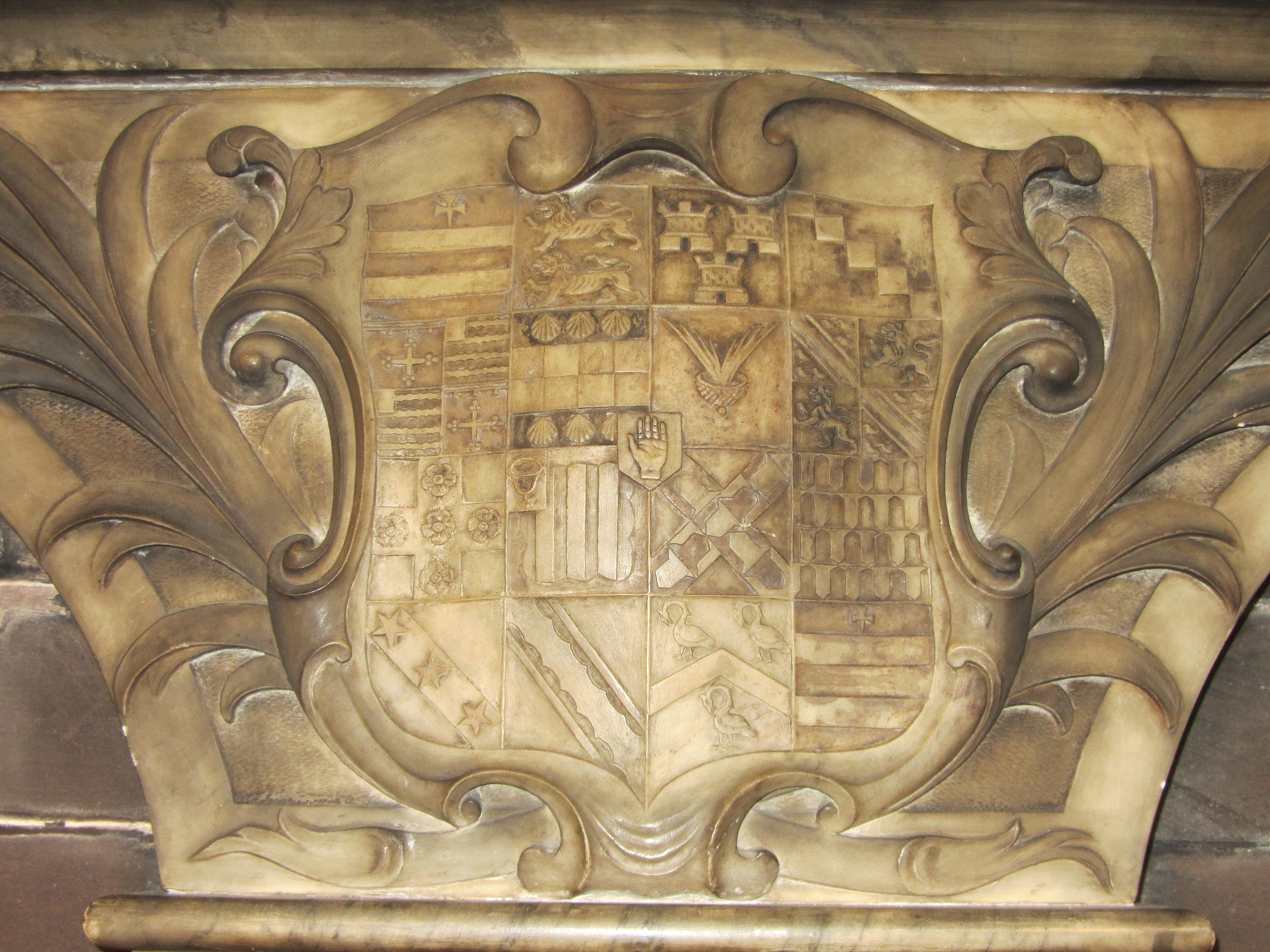
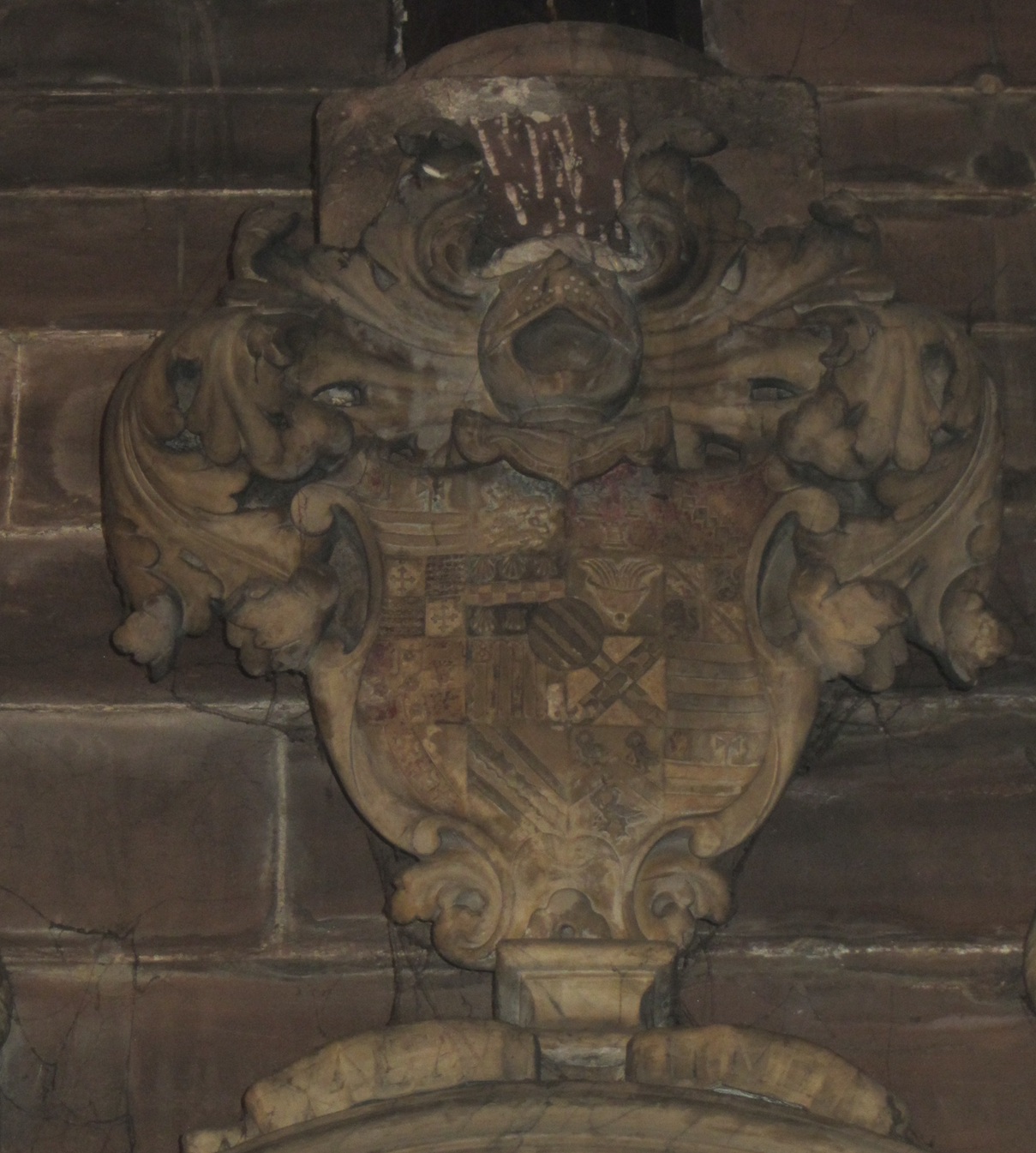
Aston Parish Church Coat of Arms
Abbreviations used on the monuments
The Latin inscriptions on the Holte monuments in Aston Parish Church make frequent use of the conventional abbreviations
found on 17th- and 18th-century memorials. The expanded versions given on this page follow the standard scholarly readings.
The principal abbreviations that appear on the stone are:
- H.S.E. = Hic Sepultus Est or Hic Situs Est (“Here is buried” / “Here lies”)
- M.S. = Memoriae Sacrum (“Sacred to the memory”)
- q. / quib. = quibus (“by which” / “to whom”)
- Dni = Domini (“of the Lord”)
- Ætat. / Ætatis = Ætatis (“of the age of”)
- Anno Salutis = “in the year of Salvation”
- Eq. / Eques = Eques (“Knight”)
- Baronettus / Bart. = “Baronet”
- fil. = filius / filia (“son” / “daughter”)
- ux. = uxor (“wife”)
- ob. / obiit = obiit (“died”)
- & = et (“and”)
Roman numerals are used for dates (e.g. MDCLIV = 1654). Superscript letters and suspension marks (bars over letters) are
also common and have been expanded in the transcriptions for clarity.
References
-
Aston Parish Church: A Short History
Aston Parish Church, Birmingham. Parish booklet including notes on monuments and architectural history. -
Pevsner, Nikolaus & Wedgwood, Alexandra. The Buildings of England: Warwickshire
Penguin Books. Architectural description of Aston Parish Church with references to notable monuments. -
Aston Hall and the Holte Family
Birmingham Museums Trust. Historical context for the Holte family and their memorials in Aston Parish Church. -
Dugdale, William. The Antiquities of Warwickshire Illustrated>
1656; later editions. Early descriptions of Aston, the Holte family, and church memorials. -
Birmingham & Aston Local History Pamphlets
Various authors, Birmingham Library Services. Includes transcriptions of Aston Church monuments and parish records. -
Aston Parish Registers (16th–18th centuries)
Birmingham Archives & Heritage. Parish records useful for corroborating Holte family dates and connections.